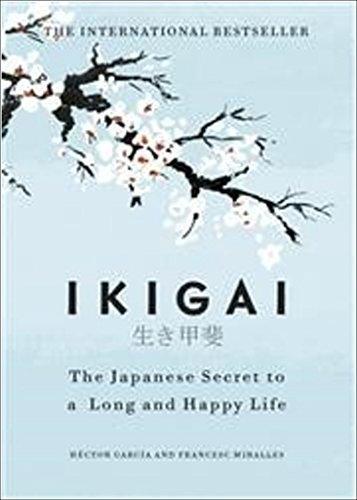

M. J. Wright a publié une critique de Ikigai par Francesc Miralles
How Ikigai Changed the Way I Think About Finding My Purpose.
4 étoiles
Ikigai was an interesting read, and it came into my life at an interesting time—a pivotal point of self-introspection. For a long time, I’ve been trying to find what my "thing" was—my passion—to no avail. I tried things I thought I would like, only to be disappointed in the end. However, this book introduced me to a concept I had never considered: finding your passion by negation—by what it isn’t rather than by what it is. Instantly, this lifted a pressure off my psyche. It didn’t matter if I tried something and failed or didn’t like it because it was still progress in the right direction. I also didn’t have to try things I thought I would like; I could give myself permission to try anything and everything that crossed my path without having to psychoanalyze it first.
Admittedly, it has been quite some time since I first read …
Ikigai was an interesting read, and it came into my life at an interesting time—a pivotal point of self-introspection. For a long time, I’ve been trying to find what my "thing" was—my passion—to no avail. I tried things I thought I would like, only to be disappointed in the end. However, this book introduced me to a concept I had never considered: finding your passion by negation—by what it isn’t rather than by what it is. Instantly, this lifted a pressure off my psyche. It didn’t matter if I tried something and failed or didn’t like it because it was still progress in the right direction. I also didn’t have to try things I thought I would like; I could give myself permission to try anything and everything that crossed my path without having to psychoanalyze it first.
Admittedly, it has been quite some time since I first read Ikigai and wrote this review, which is why I’m only really mentioning what stuck with me and less so on the Blue Zone and general psychological aspects. (Do not take this as those subjects being uninteresting; quite the opposite—they provide some great lessons and context for the rest of the book.)
Now, with that out of the way, let us continue.
The definition of ikigai itself was impactful. I finally had a word that described "passion" in a way that added so much depth and nuance. It was akin to how gezelligheid in Dutch adds so much more depth than just "coziness" in English. (Note: I cannot speak either Japanese or Dutch, so while the descriptions add depth for an English speaker, there is only so much we can extract.) I would describe ikigai for you now, but I cannot describe it better than the book itself.
Another subject the book reiterated and reminded me of was the importance of laughter, good company, community, and staying away from toxic things and people in our lives. It sounds obvious, and we probably all know this, but some of us also know how difficult it can be to get out of toxic situations, locations, people, and practices. And how rare it is to find a loving and accepting group of people who won’t tear you down to build themselves up when it’s convenient. (And if you cannot find that community—that family—then you might have to build your own and be that community for someone else.) Our emotional health is tied to our physical health. When we’re happy and joyful, it does our body and soul a wonderful good, and it also makes it easier for us to make those hard choices.
Finally, to close, the last lesson this book taught me—directly or indirectly, it matters not—is that finding your ikigai, your purpose, is your first and most noble goal. The second is doing what you love when you find it.
Thank you for reading.
—MJW