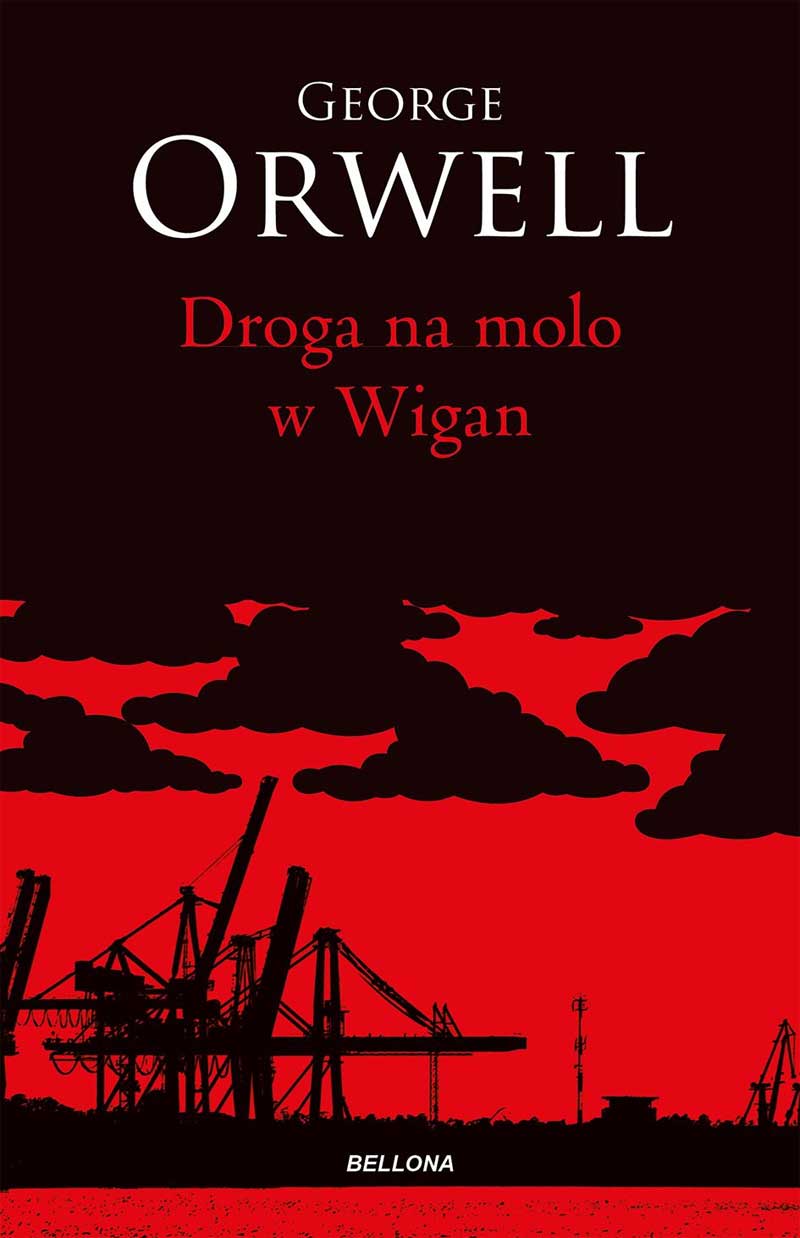
Książka po raz pierwszy została wydana w Anglii w 1937 roku i niemal z dnia na dzień stała się bestsellerem. To jeden z najlepszych i najbardziej wnikliwych zbeletryzowanych reportaży. Orwell jak wiemy doświadczył na własnej skórze, jak żyli wyzyskiwani, upośledzeni przez los i gospodarkę rynkową nędzarze. Efektem prowadzonego przez niego „eksperymentu” jest Droga na molo w Wigan.
Pierwsza część książki zawiera napisaną w pierwszej osobie reportażową relację o pracy, życiu, warunkach mieszkaniowych, zwyczajach i swoistej subkulturze robotników z Wigan, a także z okolic Barnsley i Sheffield. Były to wówczas …
Książka po raz pierwszy została wydana w Anglii w 1937 roku i niemal z dnia na dzień stała się bestsellerem. To jeden z najlepszych i najbardziej wnikliwych zbeletryzowanych reportaży. Orwell jak wiemy doświadczył na własnej skórze, jak żyli wyzyskiwani, upośledzeni przez los i gospodarkę rynkową nędzarze. Efektem prowadzonego przez niego „eksperymentu” jest Droga na molo w Wigan.
Pierwsza część książki zawiera napisaną w pierwszej osobie reportażową relację o pracy, życiu, warunkach mieszkaniowych, zwyczajach i swoistej subkulturze robotników z Wigan, a także z okolic Barnsley i Sheffield. Były to wówczas najbardziej uprzemysłowione okręgi Wielkiej Brytanii, gdzie wydobywano węgiel i gdzie znajdowały się huty oraz wielkie zakłady produkcyjne. Opis pracy w kopalni węgla do dziś uchodzi za majstersztyk światowego reportażu. Znakomity jest również niezwykle wprost szczegółowy opis codziennej egzystencji ludzi wyzyskiwanych, biednych, bezrobotnych. Orwell wyraźnie poszukuje tu odpowiedzi na pytanie, dlaczego ci, którym kraj zawdzięcza bogactwo i funkcjonowanie – przede wszystkim górnicy – są tak nieludzko traktowani i żyją w tak nieopisanej nędzy.
Druga część książki w bardzo niekorzystnym świetle ukazuje realia ówczesnego socjalizmu, stanowiącego właściwie domeną middle class i lekceważącego tych, dla których wspomniany socjalizm mógłby być dobrodziejstwem. Tę część powszechnie uznaje się za jeden z najznakomitszych w światowej literaturze politycznej traktatów o socjalizmie, jego twórcach, błędach i zaletach.
Un curieux ouvrage qui se compose de deux parties.
La première est une analyse sociologique des conditions de vie des ouvriers et des mineurs dans le nord de l'Angleterre, Orwell s'étant "immergé" parmi eux pour écrire ce livre.
La deuxième partie est un essai, très caustique sur les raisons pour lesquelles le socialisme ne prend pas en Angleterre, basé sur des considérations de culture et de classe. Le livre est écrit en 1936, l'histoire de la Grande-Bretagne des décennies qui suivent donnera plutôt tort aux prédictions d'Orwell, mais beaucoup des analyses développées sonnent étrangement juste dans la France des années 2020. Une lecture déroutante et stimulante.
I quite enjoyed the initial description of working class life with a focus of the life of a coal miner.
Next was a bit of an unanchored essay on socialism which I struggled with a bit. I started to become word blind to proleteriat and bourgeoisie - seriously it felt like every other word at some point.
This mellowed a little into the next section which looked ahead more, applied comparisons to the different ways a population is controlled and called out that many people who do not consider themselves working class in the "modern" day, really are.
I loved the section on the mechanisation of the world, it was interesting to look at his comments on how eventually event art and "refined" passtimes would become mechanised, leaving nothing. There is nothing humans do that would not …
This was weird, it almost felt like three books.
I quite enjoyed the initial description of working class life with a focus of the life of a coal miner.
Next was a bit of an unanchored essay on socialism which I struggled with a bit. I started to become word blind to proleteriat and bourgeoisie - seriously it felt like every other word at some point.
This mellowed a little into the next section which looked ahead more, applied comparisons to the different ways a population is controlled and called out that many people who do not consider themselves working class in the "modern" day, really are.
I loved the section on the mechanisation of the world, it was interesting to look at his comments on how eventually event art and "refined" passtimes would become mechanised, leaving nothing. There is nothing humans do that would not be considered work by someone, and therefore will be automated away. This feels very apt at the moment with generative AI.
He calls attention to the fallacy of being able to choose to do things "the old fashioned way" in the ideal eventual utopia - when was the last time you rode a horse to London, or ate without modern cutlery?
Also interesting was the descriptions of how classes of people are set against each other with deeply rooted biases. It doesn't matter that the working class are uneducated or dress badly. It's easy to see how you could change that. No, what matters is that they smell and are dirty. Something you see echoed these days in other conflicts.
He also calls for awareness of the regression to British fascism which will feature lions and unicorns instead of swastikas and eagles. Fascists don't see themselves as an oppressor even with cudgel in hand - they see themselves as defenders of some idealised European culture.